Packing for Tabletop Game Night
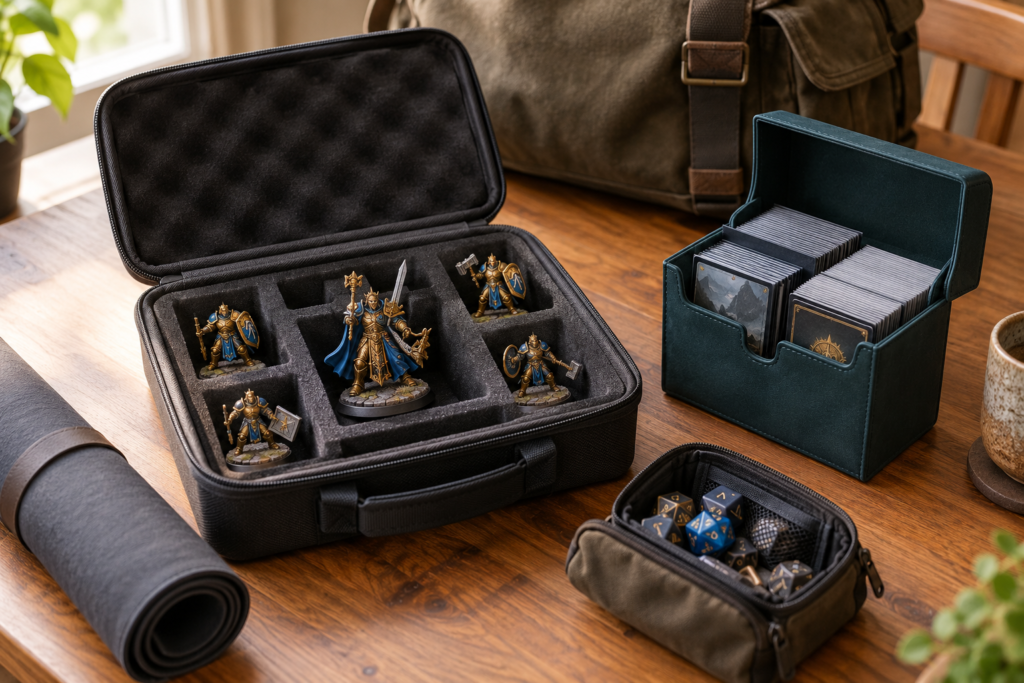
A well-packed gaming bag makes the trip to a local club or a friend’s house easier, especially when the evening involves more than one game. A deck box keeps a card-based game organised and ready to unpack. Miniatures need a different approach, with enough support to prevent delicate parts from catching or colliding during transport. For players bringing an age of sigmar army alongside their card collection, planning separate spaces for each helps protect both. The aim is a manageable kit that arrives intact, takes little time to set up and is easy to check before heading home.
Pack for the Planned Games
The first step is confirming what the session actually involves. A casual evening with one agreed game needs a different load from a club visit where several opponents and activities are possible.
Bringing every available option can make a bag heavy without improving the evening. A more useful approach is to pack the agreed essentials first, then add a backup game only if there is a realistic chance of playing it.
For a card game, that might mean the selected deck, any required tokens and a playmat. For a miniature battle, it means checking the agreed army list against the models being packed, along with the rules references and measuring equipment needed for that session.
A short checklist removes much of the guesswork. Keeping it with the gaming kit also makes repeat visits easier, particularly when small accessories tend to migrate between drawers, bags and hobby desks.
The checklist should reflect actual habits. An item forgotten twice deserves a permanent place on it; something carried for months without being used may belong at home.
Match Storage to the Contents
Card storage should fit the cards as they are used. Sleeves add bulk, so capacity needs to be checked with the complete sleeved deck rather than estimated from an unsleeved stack.
A suitable container should close without pressing hard against the cards. It should also allow them to be removed without bending corners or repeatedly catching sleeve edges. Tokens and spare cards need enough room of their own rather than being squeezed into an already full compartment.
Miniatures require attention to shape as well as quantity. Tall banners, extended weapons and wide scenic bases can make two similarly sized models very different to pack.
Purpose-built miniature cases use different internal support systems, including foam and flexible inserts, so the fit should be assessed against the actual collection. Warhammer’s own transport guidance highlights the challenge of protecting painted models while moving them between locations.
Before closing a case, the player should check that no projecting part sits against the lid or catches on neighbouring models. A compartment that technically accommodates a miniature may still be awkward if removing it requires pulling on a fragile detail.
Testing the arrangement at home gives time to adjust it without the pressure of a waiting opponent.
Give Small Accessories a Fixed Place
Dice, counters and measuring tools are easy to forget because they are often packed last. Assigning them a small pouch or dedicated compartment makes the kit more predictable.
Separating loose accessories from painted models also prevents unnecessary contact during the journey. A handful of dice should not be free to roll around a miniature tray, and a metal measuring tool should not sit loose against card sleeves.
Within the main bag, heavier items should sit securely without pressing against delicate contents. Books, cases and accessories need an arrangement that stays stable when the bag is carried normally.
Drinks deserve their own consideration. A firmly closed bottle in a separate external pocket reduces the chance of a leak reaching cards, paper references or painted pieces. Food is best kept apart from the gaming equipment too.
The bag itself should be practical for the journey. A short drive and a walk involving public transport place different demands on weight, handles and carrying comfort. A fully packed trial lift can reveal an awkward load before departure.
Make Unpacking and Packing Away Simple
At the venue, a small amount of organisation helps keep the table usable. Cards and miniatures can be unpacked as needed, while empty cases and bags remain clear of playing areas and walkways.
A consistent place for spare pieces reduces confusion during a busy session. Tokens awaiting use, removed models and unused accessories should remain identifiable rather than spreading across neighbouring tables.
Packing away deserves the same attention as setting up. A quick check against the original list can catch a missing die, forgotten model or borrowed token before everyone leaves.
Checking beneath the table and around the seating area is particularly useful after a crowded club night. Any borrowed items should be returned before similar-looking equipment disappears into separate bags.
Once home, the kit can be checked for damaged sleeves, loose miniature parts or missing accessories. Addressing those small issues before the next session keeps preparation straightforward and leaves more of the evening available for playing.