Common Cigar Storage Mistakes
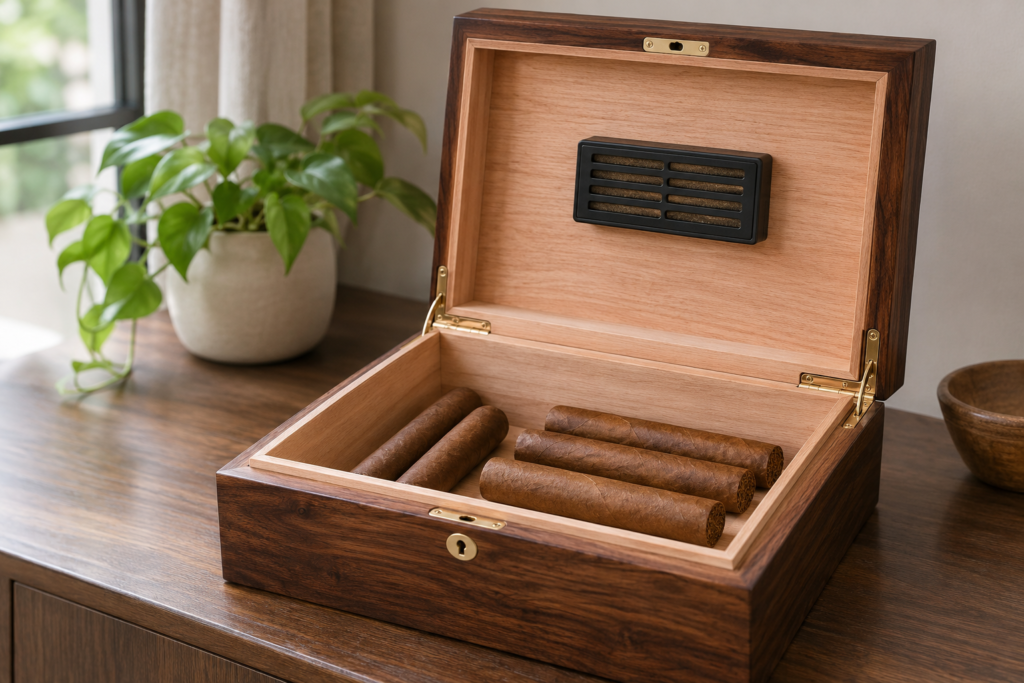
A cigar humidifier helps maintain moisture inside a storage enclosure, but its effectiveness depends on how the whole setup is managed. An unsuitable position or poorly fitting lid can undermine an otherwise sensible arrangement. Choosing a cigar humidor therefore involves more than comparing timber finishes and display windows. Capacity, the seal and ease of maintenance deserve equal attention. A specialist cigar shop can help explain the differences between storage systems before a buyer commits to one.
For someone keeping a small collection at home, the most useful approach is to establish a consistent routine. Most storage problems are easier to investigate when the owner knows what has changed, whether that means a new batch of cigars, a different room or a recently replaced humidity pack.
Choosing storage that does not suit the collection
Advertised capacity is a starting point rather than a guarantee that every collection will fit comfortably. Long or thick cigars take up more room than smaller formats, while trays, dividers and humidity devices also occupy space. A box that looks generous in a product photograph may feel cramped once everything is inside.
Buyers should consider the dimensions of the cigars they usually keep and check the usable internal space. There should be enough room to retrieve individual pieces without forcing the lid closed or repeatedly rearranging the entire collection. Someone who purchases occasional boxes may also need more flexibility than someone who stores a handful of singles.
The seal deserves close inspection. A lid should sit evenly and close without obstruction. Decorative details add visual appeal, but they do not replace a sound enclosure. If humidity keeps falling, the owner should check that no packaging, accessory or protruding cigar is preventing proper closure.
Skipping preparation and trusting every reading
Some wooden storage boxes require seasoning before use. This prepares the timber for a humid environment so that dry wood does not draw moisture away from the contents. The correct process depends on the enclosure and the conditioning product, so the manufacturer’s instructions should guide the preparation.
Rushing this stage can create confusion later. An owner may keep adding moisture to address a low reading when the timber has not yet been properly conditioned. Keeping a record of the preparation date and method makes subsequent troubleshooting more straightforward.
A hygrometer also needs attention. Digital displays can look reassuringly precise, but the instrument still needs checking according to its calibration instructions. An inaccurate reading can prompt unnecessary adjustments. Manufacturer guidance identifies uncalibrated instruments and unseasoned wooden enclosures among the possible causes of apparent or actual humidity problems.
Changing too many things at once
A disappointing reading can tempt an owner to add another humidity pack, refill a device and move the box on the same afternoon. That makes it difficult to work out which change helped or whether the original reading was reliable.
A better troubleshooting sequence begins with checking the instrument, inspecting the closure and reviewing the instructions for the humidity system. Any adjustment should then be given the recommended time to take effect. Brief notes about readings and changes can reveal a pattern that a single check misses.
Different moisture-control products should not automatically be combined. Compatibility depends on how each system works, and some manufacturers explicitly advise against using their packs alongside other humidification products. Following one coherent set of instructions avoids competing adjustments and makes maintenance easier to track.
Treating maintenance as an occasional rescue job
Storage works best when it forms part of an ordinary household routine. The enclosure should occupy a suitable position away from direct sunlight and sources of heat, with the manufacturer’s temperature guidance kept in mind. A convenient shelf is only useful if the surrounding conditions are suitable throughout the day.
Humidity devices need servicing or replacing as directed. Owners should also check that the lid closes properly after each use and that accessories remain in their intended positions. These small habits reduce the chance of an unnoticed problem continuing for weeks.
When a reading changes, context matters. Recently added cigars, incomplete preparation or a faulty instrument may each require a different response. Checking those possibilities methodically is more useful than repeatedly adding moisture without identifying the cause.
A manageable collection and a simple maintenance routine make home storage easier to oversee. Choosing an enclosure that fits the contents, preparing it correctly and keeping reliable records gives the owner a practical basis for spotting changes early.